Demo application
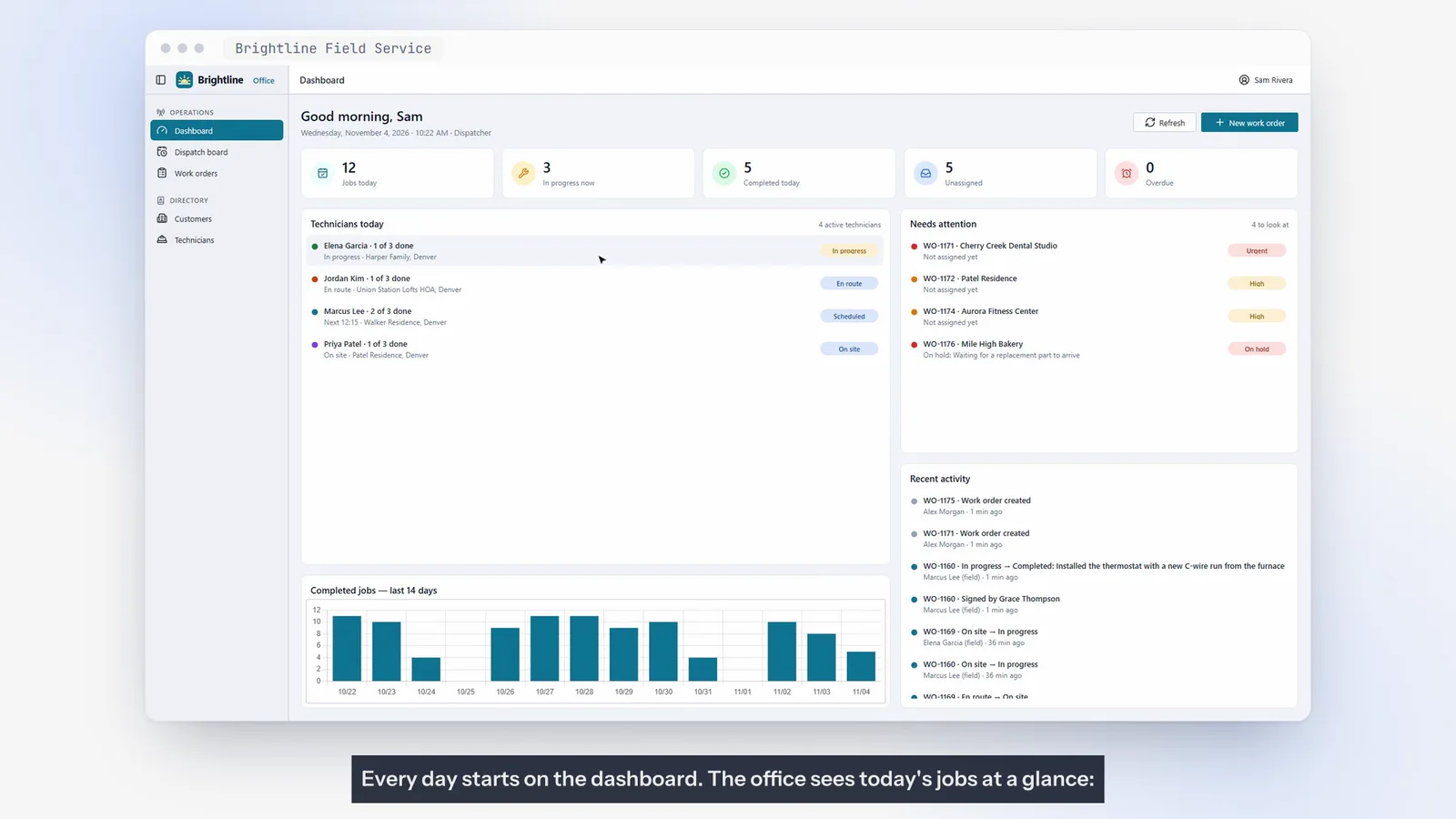
Brightline Field Service
Office & dispatch app + technician phone app
From the first call to the customer’s signature.
- Customers & locations
- Work orders
- Scheduling
- Dispatch board
A white-label portal a commercial testing laboratory gives its customers to request testing, follow samples through the lab, read released results and download certificates — connected to the LIMS through an integration gateway.
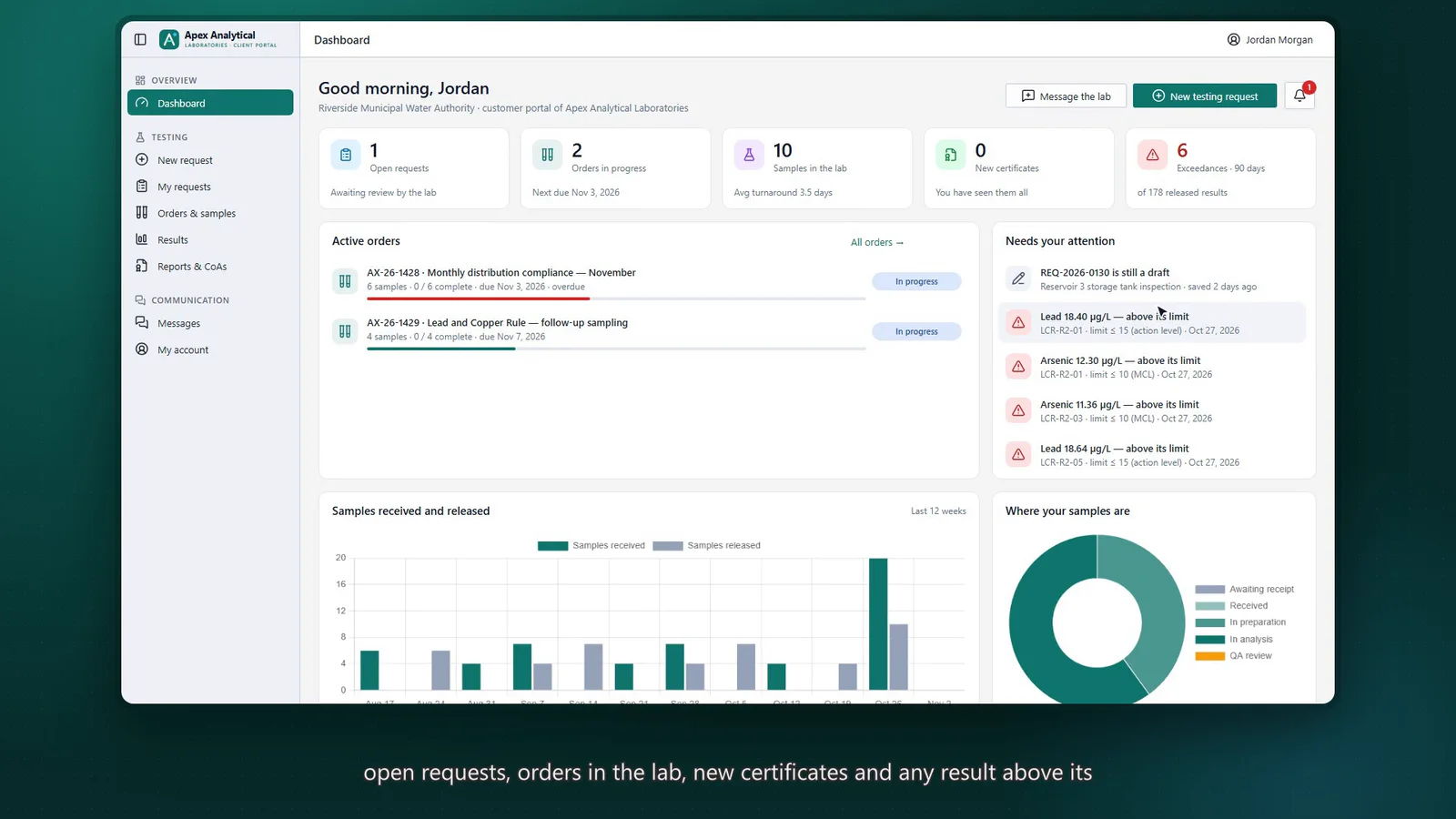
Shown with a fictional laboratory, “Apex Analytical”. The LIMS connection in this demo is SpectraLIMS through a demo integration with simulated laboratory data. Other LIMS integrations can be developed on request. This is a demonstration application and a customizable starting point — not a customer deployment.
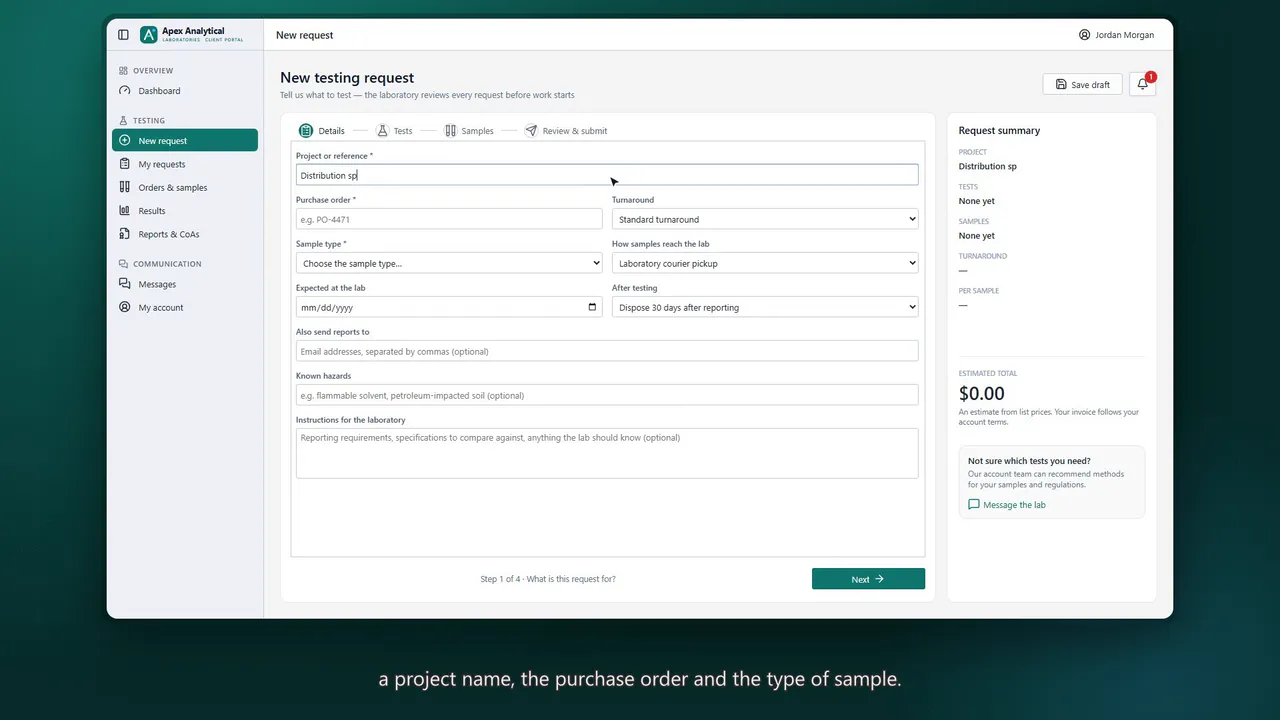
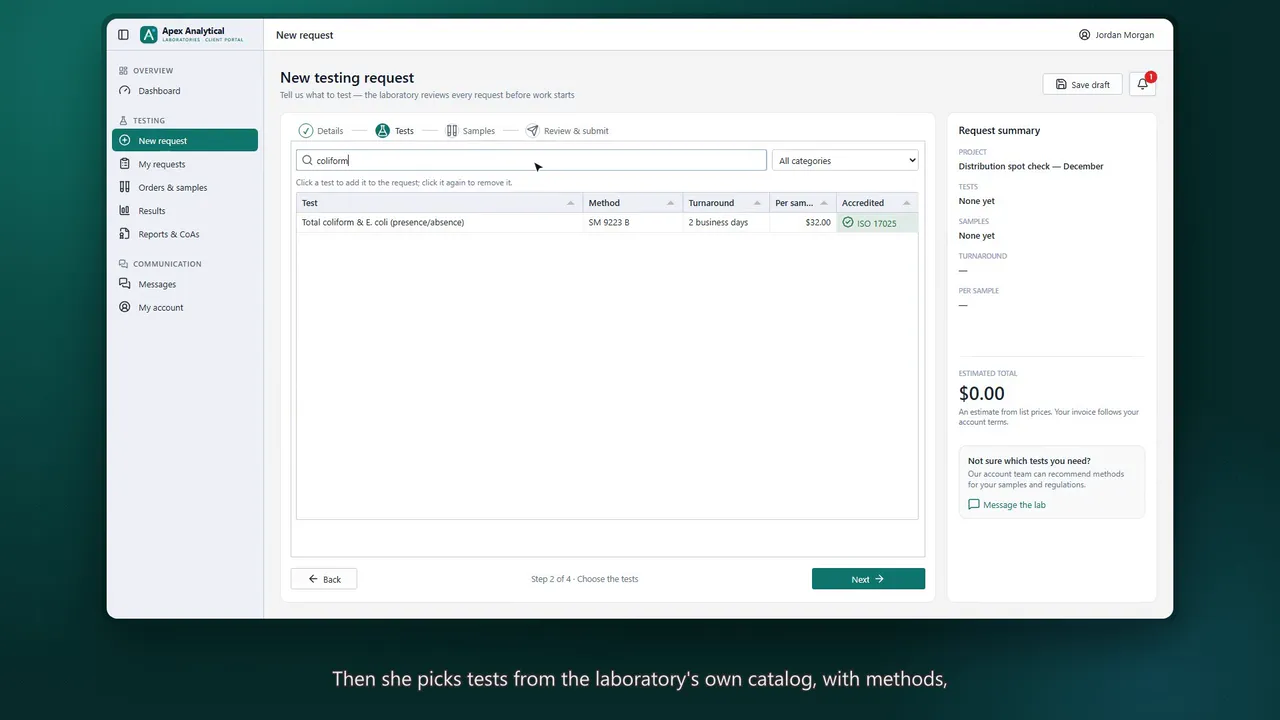
Customers pick tests from the laboratory’s own catalog — methods, turnaround, prices and accreditation — list their samples, and see a running estimate.
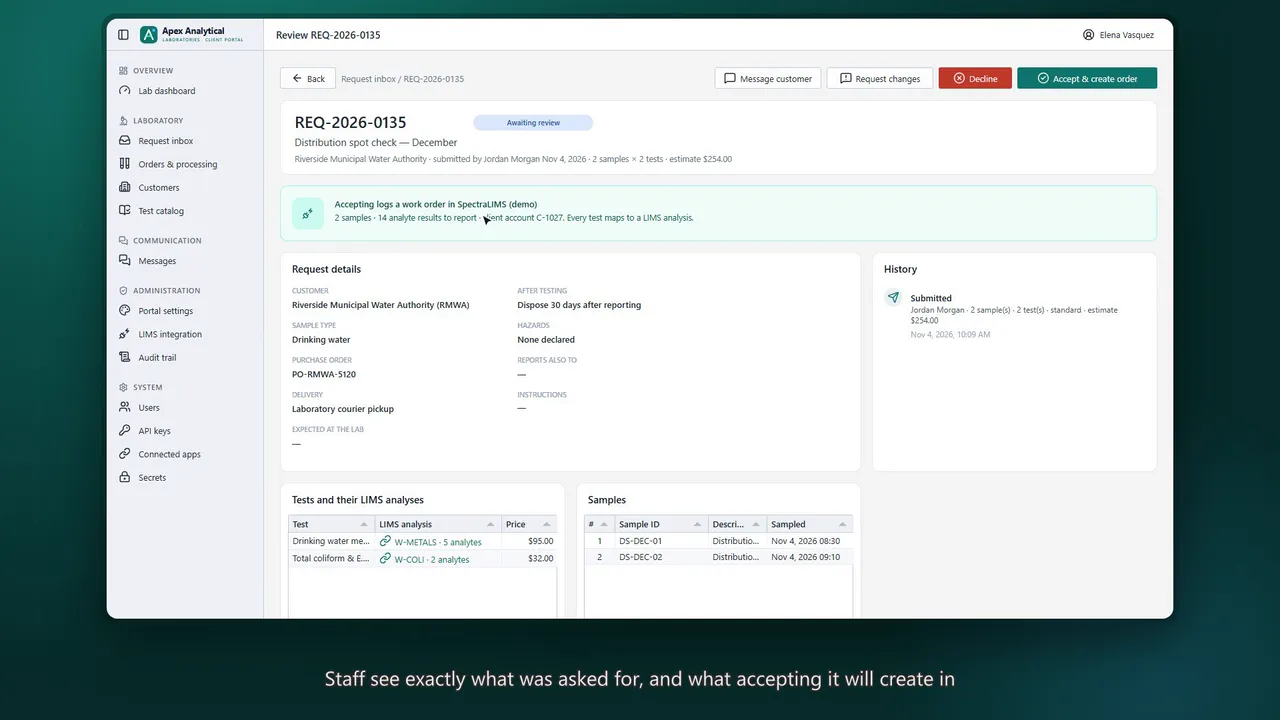
Lab staff see exactly what was requested and what accepting it will create in the LIMS; each test in the catalog is mapped to a LIMS analysis.
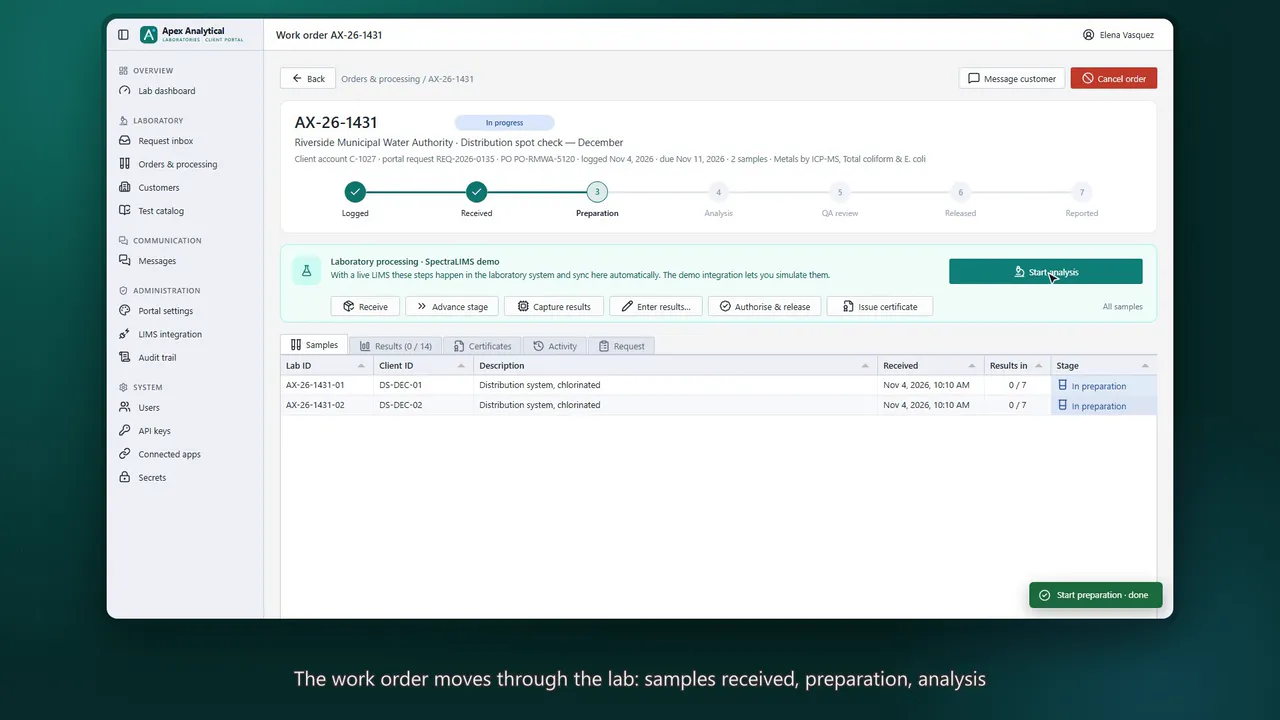
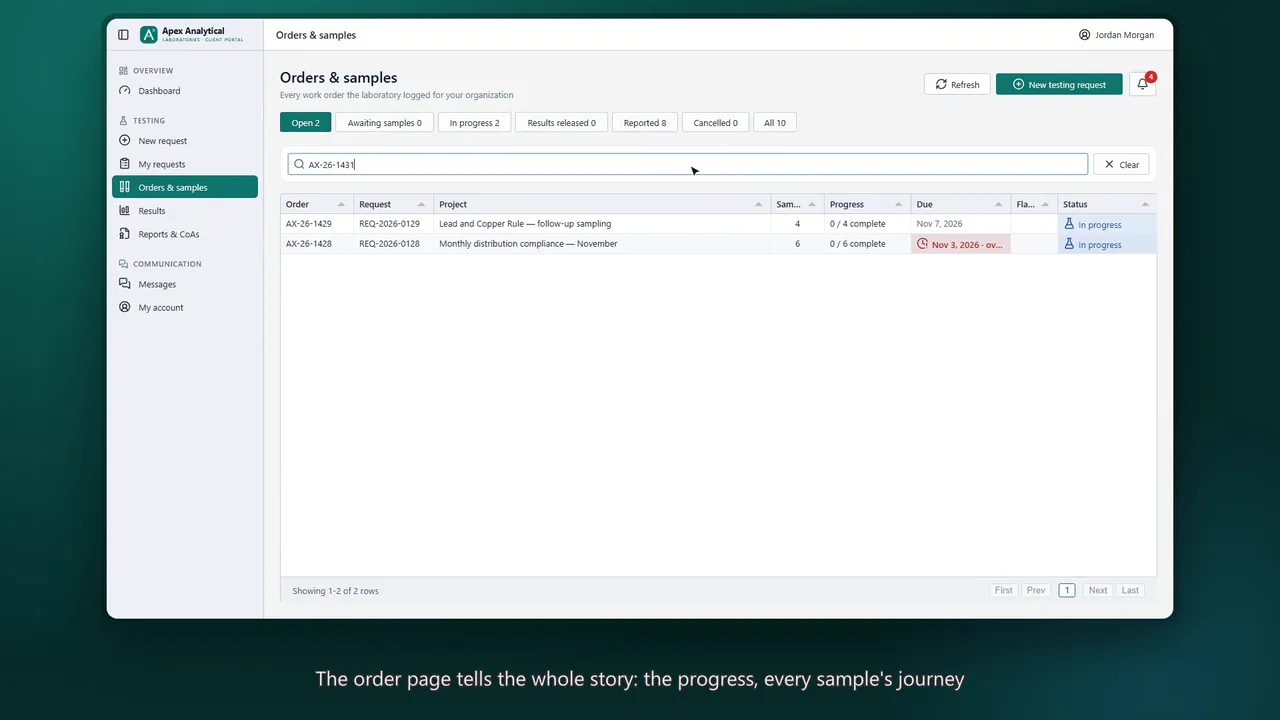
Received, preparation, analysis, quality review — customers follow progress, and only see results once they are authorized and released.
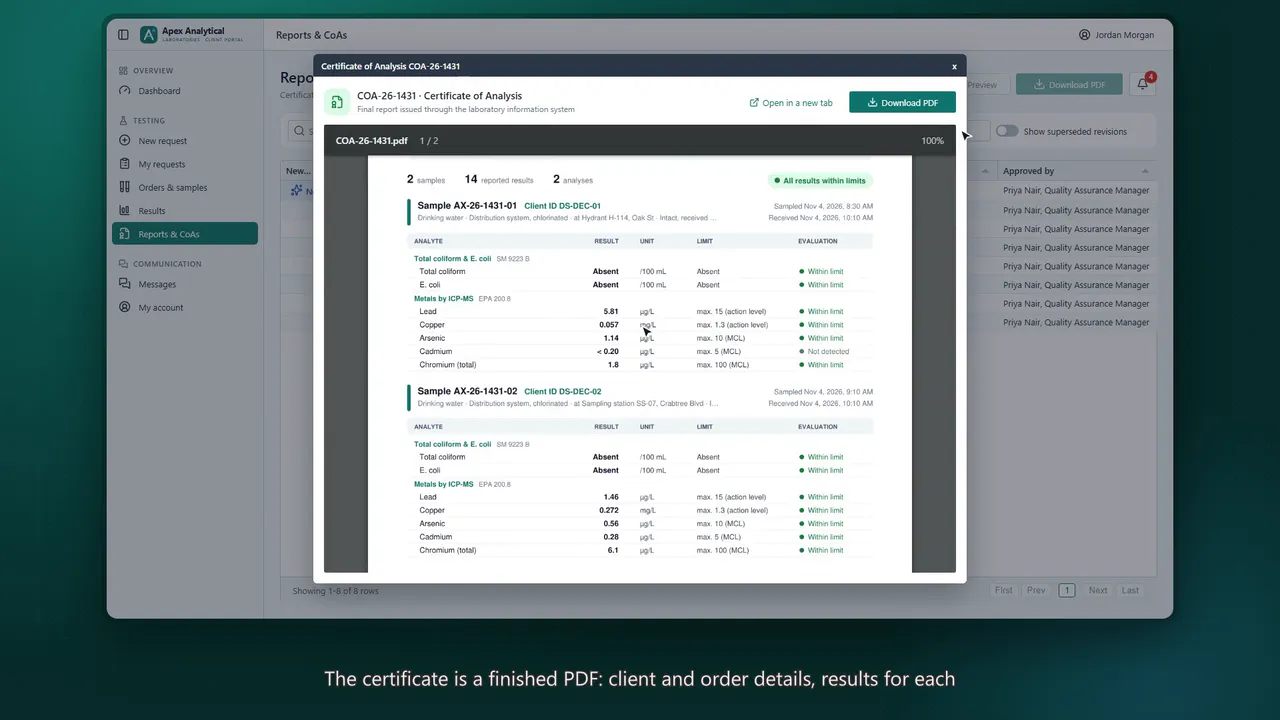
Finished certificate PDFs with limits, evaluations and highlighted exceedances; results across all orders can be filtered and exported to a spreadsheet.
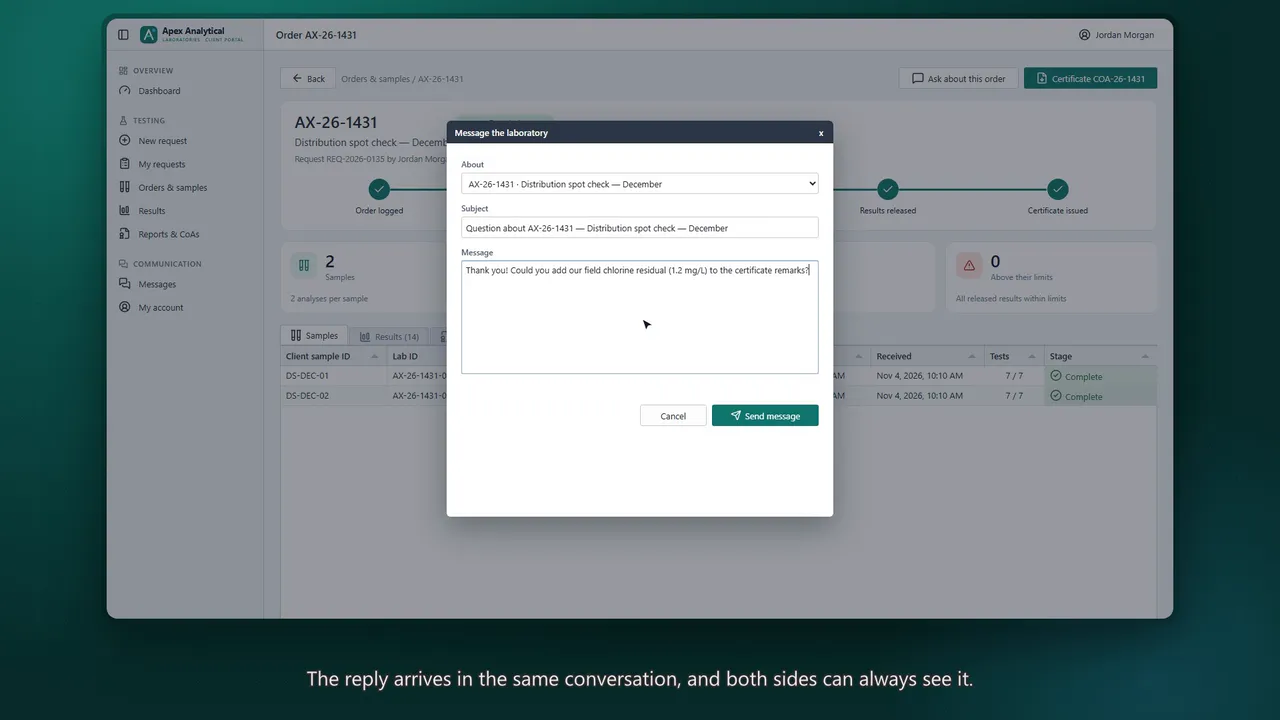
Customers ask questions right from the order, and both sides always see the same conversation.
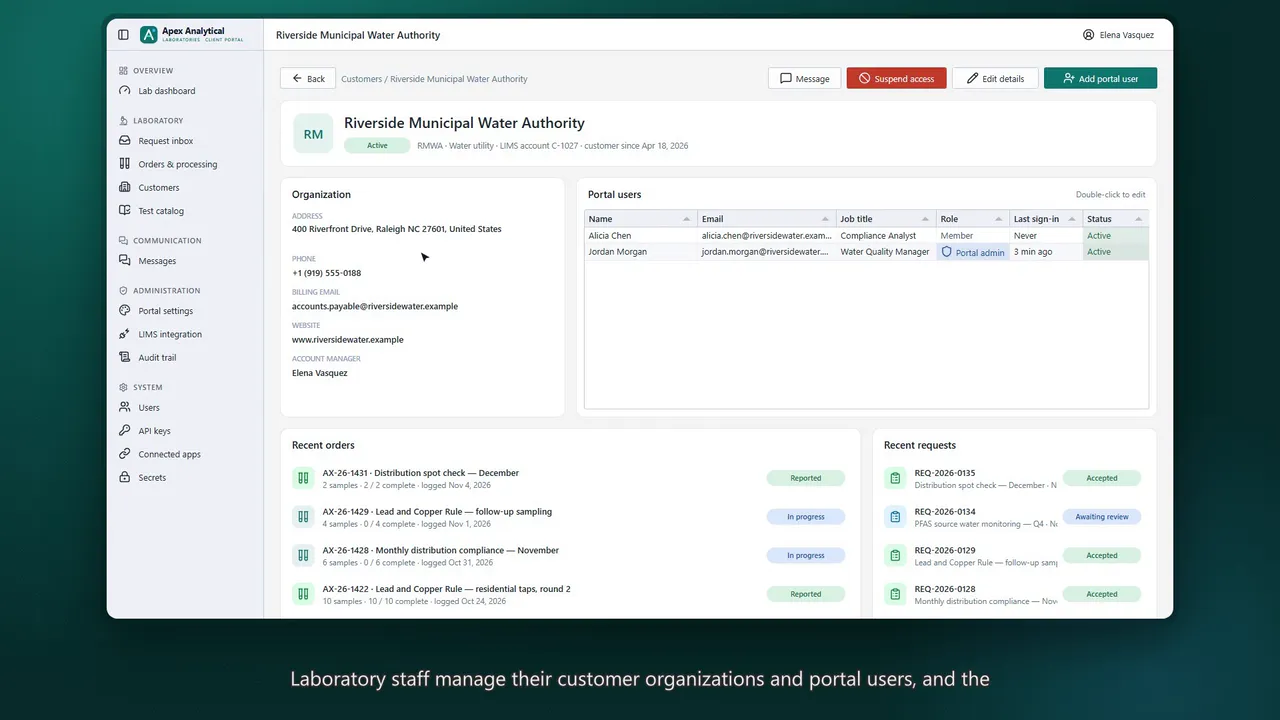
The lab sets its name, colors, logo and contact details. Each organization sees only its own data, enforced on the server, with significant actions in the audit trail.
Modules shown
Frames from the walkthrough. Every screen can be adapted — fields, workflows, terminology and branding.
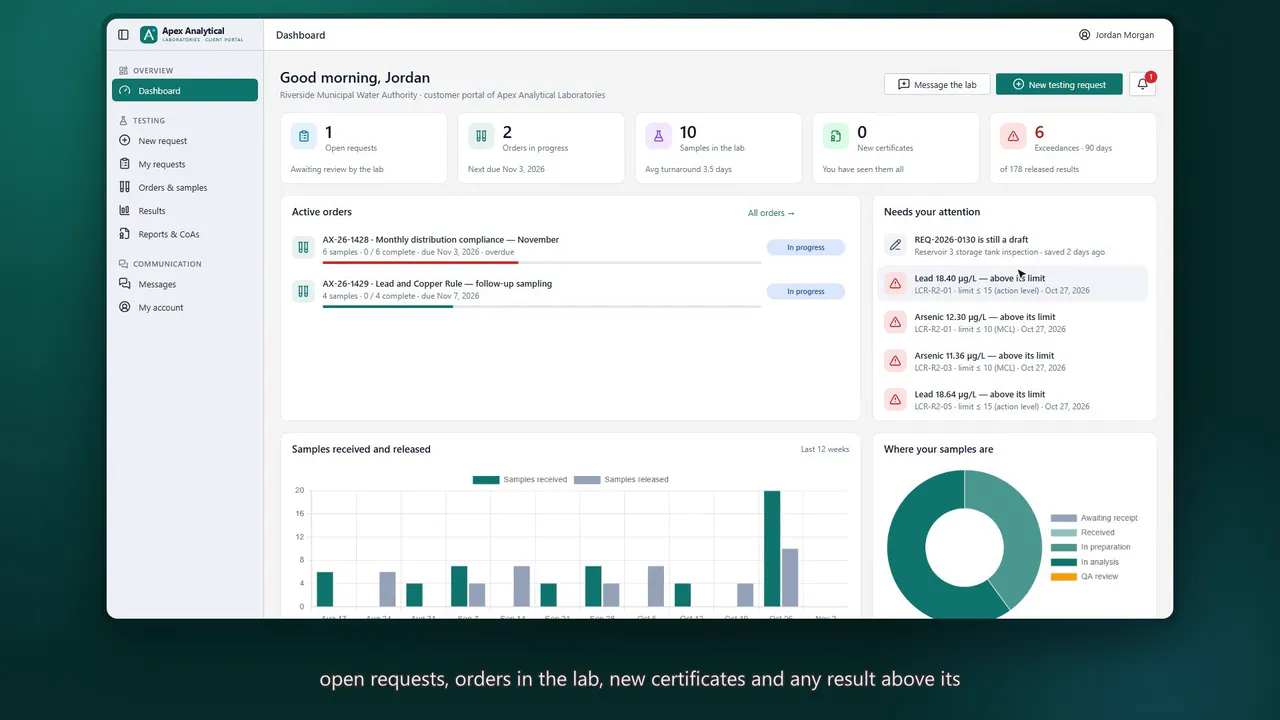
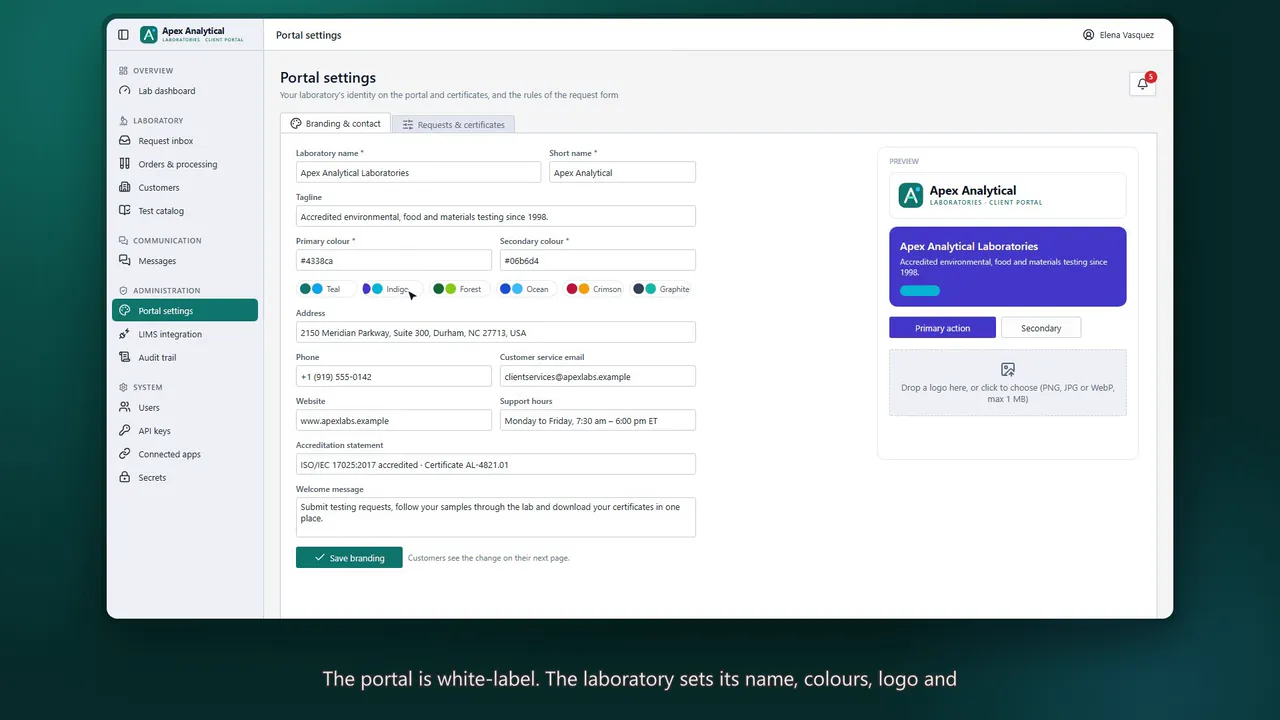
This is a LIMS customer portal, a white label portal that a commercial testing laboratory gives its customers to request testing, follow samples through the lab, read released results, and download certified reports. Here, it carries the brand of a demo laboratory, Apex Analytical. Jordan runs water quality for a municipal utility. Her dashboard shows what matters at a glance.
Open requests, orders in the lab, new certificates, and any result above its limit, with her active orders, recent activity, and trends. A new testing request starts with the basics, a project name, the purchase order, and the type of sample. Then she picks tests from the laboratory's own catalog, with methods, turnaround, prices, and accreditation. The summary keeps a running estimate.
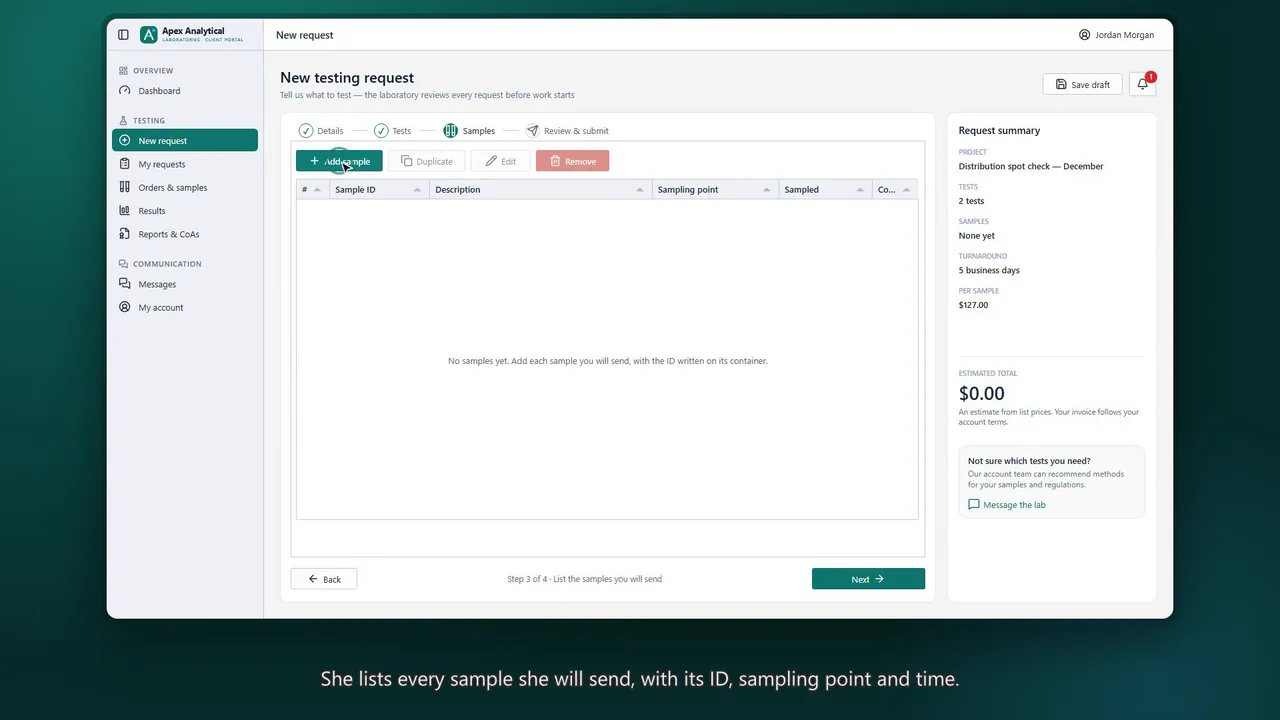
She lists every sample she will send, with its ID, sampling point, and time. The next sample ID is suggested for her. One last review, a confirmation, and the request is on its way to the laboratory. At Apex, the request lands in the laboratory's inbox.
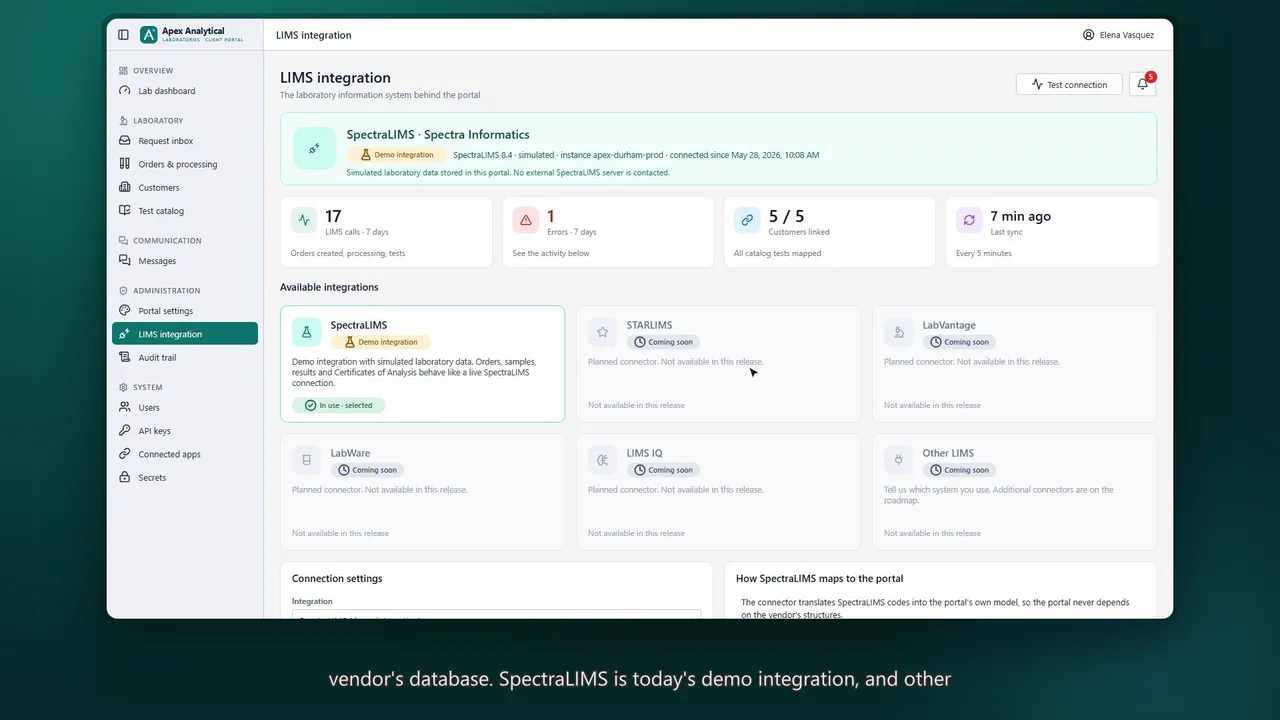
Staff see exactly what was asked for and what accepting it will create in their LIMS. Each test is mapped to a LIMS analysis. Accepting it logs a work order in the LIMS. Here, that is SpectraLIMS, through a demo integration with simulated laboratory data.
Jordan is notified straight away. The work order moves through the lab. Samples received, preparation, analysis, and instrument results, then quality review. With a live LIMS, these steps happen in the lab system and sync automatically.
The demo integration lets us simulate them. Tests are authorized and released, and only now can the customer see them. Then the certificate of analysis is issued. On Jordan's side, the bell shows what happened.
One click on the notification opens the certificate. The certificate is a finished PDF. Client and order details, results for each sample with limits and evaluations, exceedances highlighted, and the approval. Jordan can preview it or download it.
The order page tells the whole story. The progress, every sample's journey through the lab, and the released results with their limits. Across all her orders, the results page finds exceedances in one click and exports everything to a spreadsheet. Questions go straight to the lab, right from the order.
The reply arrives in the same conversation, and both sides can always see it. Laboratory staff manage their customer organizations and portal users, and the test catalog, where every test is mapped to an analysis in the LIMS. The portal is white label. The laboratory sets its name, colors, logo, and contact details, and every page and every certificate follows.
Integrations sit behind one clean gateway, so the portal never depends on a vendor's database. SpectraLIMS is today's demo integration, and other integrations are coming on request. Each organization sees only its own data, enforced on the server, and every significant action is recorded in the audit trail. And customers can check on their samples from a phone, wherever they are.
A modern digital experience for your laboratory's customers. The LIMS customer portal, built with AppMaker.
Demo application
Office & dispatch app + technician phone app
From the first call to the customer’s signature.
Demo application
Auto repair shop management
The whole repair visit, in one place.
Demo application
Class booking & studio management
Members book their place in class. The studio runs everything else.
Tell us about your organization and what you would change. We’ll discuss how to adapt it — or what a new application would look like.